The Rise of Equipment-Free Strength Training for Older Adults
Aging adults are increasingly turning to short, accessible workout routines that preserve independence and functional strength without requiring gym memberships or heavy equipment. According to recent reports, a simple 10-minute daily Pilates routine featuring core-led bodyweight movements can effectively rebuild practical full-body strength, balance, mobility, and posture for adults over 55.
This approach addresses the growing demand for workouts that support longevity, joint health, and everyday movement while fitting into busy schedules with minimal equipment requirements.
Three Essential Pilates Moves for Daily Strength
The routine centers around three fundamental Pilates exercises that work together to target multiple muscle groups and movement patterns:
The Saw
This foundational move combines spinal rotation with forward flexion, engaging the core while improving thoracic spine mobility. The exercise helps counteract the forward posture that often develops with age, particularly for those who spend significant time seated.
Hip Dips
Focusing on lateral core strength and hip stability, hip dips target the often-neglected side body muscles that are crucial for balance and preventing falls. This movement pattern directly translates to everyday activities like reaching across the body or stepping sideways.
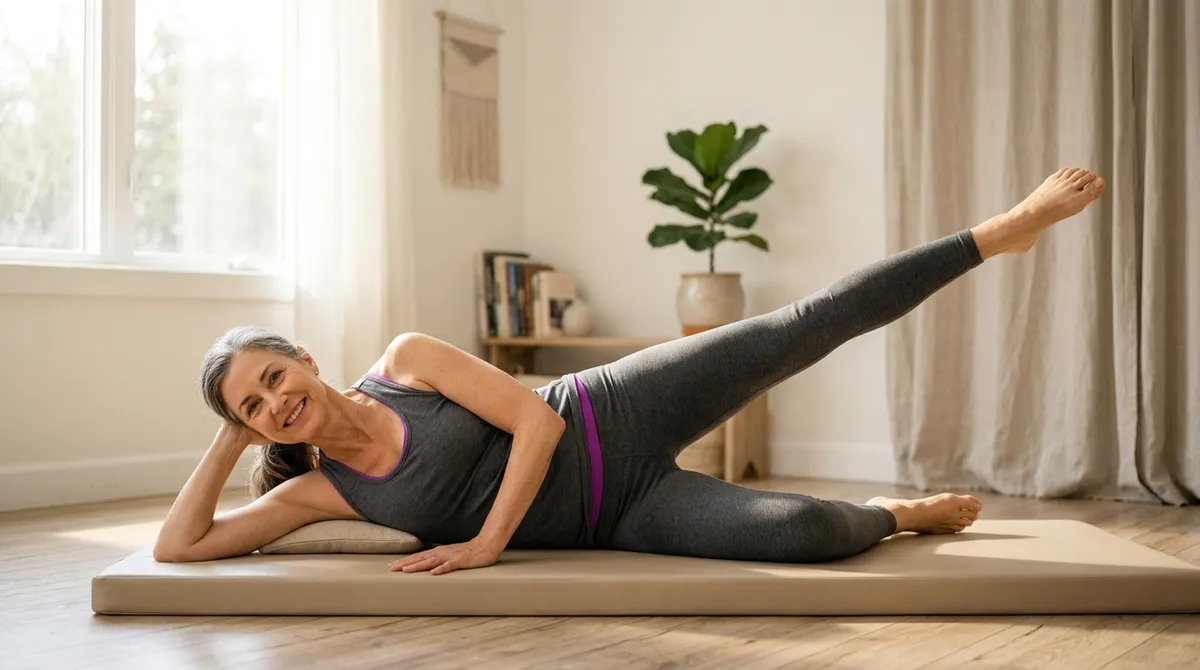
Side-Lying Leg Circles
Performed while lying on the side, this exercise strengthens the hip abductors and improves hip joint mobility. The controlled circular movements help maintain range of motion while building the stabilizing muscles around the pelvis.
Why Pilates Outperforms Machine-Based Training
According to reports, these core-led bodyweight movements offer distinct advantages over traditional gym machines for the 55-plus population. Unlike machines that isolate individual muscles, Pilates exercises work multiple muscle groups simultaneously, mimicking the complex movement patterns used in daily life.
The functional nature of these movements means improvements in strength directly translate to better performance in everyday activities like climbing stairs, carrying groceries, or getting up from chairs. This practical application makes Pilates particularly valuable for maintaining independence as we age.
Accessibility and Modification Options
One of the key benefits of this routine is its accessibility. The exercises require no equipment beyond a mat or comfortable floor surface, making it possible to maintain consistency regardless of location or schedule constraints.
Reports indicate that each movement can be modified to accommodate different fitness levels and physical limitations. Beginners can start with smaller ranges of motion and gradually progress as strength and mobility improve. This scalability makes the routine sustainable for long-term practice.
The Science Behind Short, Daily Movement Sessions
The 10-minute format aligns with current research supporting the benefits of brief, consistent exercise sessions over longer, infrequent workouts. For older adults, daily movement helps maintain joint mobility, muscle mass, and neurological connections that support balance and coordination.
Regular Pilates practice has been shown to improve confidence and stability, both crucial factors for maintaining an active lifestyle as we age. The emphasis on controlled, mindful movement also supports the mind-body connection that becomes increasingly important for overall wellness.
Building Long-Term Success
The routine's brief duration removes common barriers to exercise, such as time constraints or gym intimidation. Reports suggest that the simplicity of having just three exercises to master makes it easier for participants to maintain proper form and track progress over time.
Consistency appears to be the key factor in achieving results. The routine's design allows for daily practice without causing excessive fatigue or requiring recovery days, supporting the habit formation that leads to lasting health benefits.
A Practical Approach to Healthy Aging
This Pilates-based approach represents a shift toward more practical, sustainable fitness solutions for older adults. By focusing on movements that directly support daily activities and can be performed anywhere, the routine addresses both the physical and logistical challenges that often prevent consistent exercise participation.
The emphasis on core strength, balance, and mobility reflects a comprehensive understanding of the fitness needs specific to the aging population, offering a realistic pathway to maintaining strength and independence through simple, daily movement practice.