TL;DR:
Many beginners unknowingly perform common Pilates moves incorrectly, which can lead to discomfort and less effective workouts. Check out these five moves often done wrong and learn how to perfect your form.
Pilates is one of the most popular forms of exercise to enhance flexibility, strength, and overall wellness. Yet, when you're just starting out, mastering the proper form can feel daunting. You might think you’re nailing those moves, but there could be subtle tweaks that can take your practice to the next level. Let’s dive into five common Pilates mistakes beginners make and how to correct them to ensure your workouts are safe and effective.
1. Femur Arc
The Mistake:
Beginners often confuse the femur arc with overextending their legs, which can strain the hips and lower back.
The Fix:
When executing the femur arc, lie on your back with knees bent. Focus on gently moving your thighs toward your chest while keeping your lower back pressing down into the mat. Ensure that your movement is coming from the hips rather than the lower back.
Pro Tip:
Breathe deeply, exhaling as you pull your thighs in, and imagine your femurs tracing a gentle arc as they move. This will help you engage the correct muscles.
2. Chest Lift
The Mistake:
Many beginners pull on their necks instead of engaging their core when lifting their upper body.
The Fix:
To perform a chest lift correctly, lie on your back with knees bent. Instead of grabbing your neck, place your hands gently behind your head. As you lift your chest, focus on pulling your ribs toward your hips and initiating the movement from your torso, rather than your neck.
Pro Tip:
Engage your core by gently drawing your belly button toward your spine before lifting. This will ensure a safer and more effective movement.
3. Glute Bridge
The Mistake:
Beginners often arch their back instead of keeping a neutral spine, leading to potential discomfort and reduced effectiveness.
The Fix:
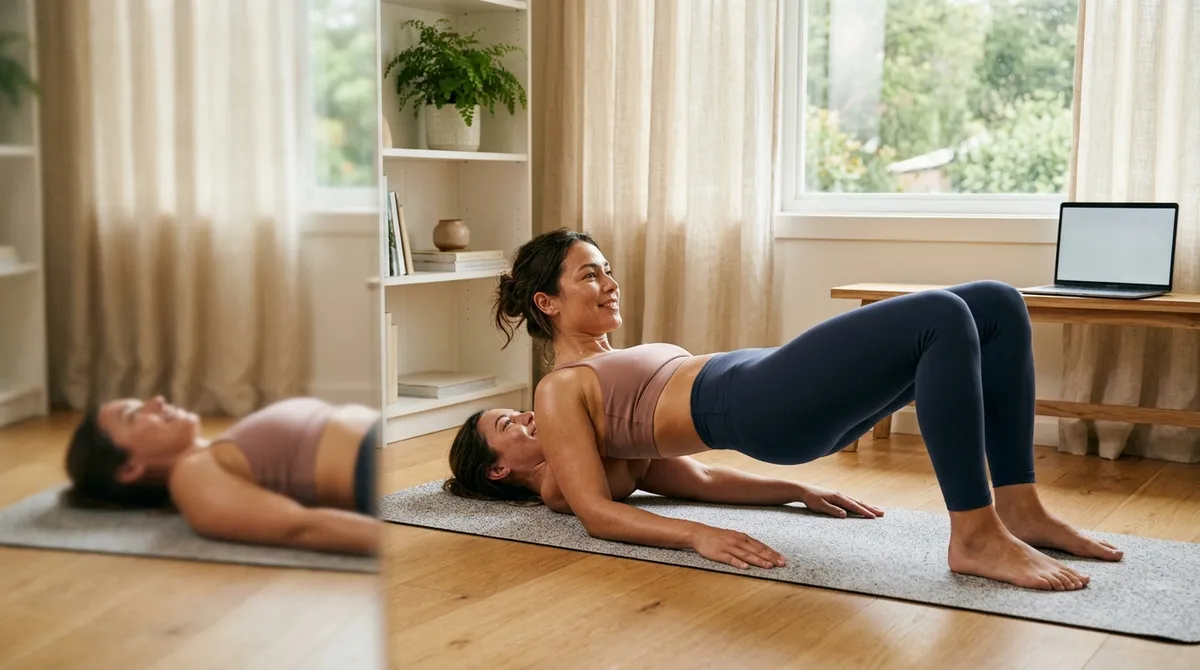
Lay on your back with knees bent and feet flat on the floor. As you lift your hips towards the ceiling, think about squeezing your glutes and pushing through your heels while maintaining a neutral spine. Avoid collapsing your lower back; keep it straight as you rise.
Pro Tip:
Focus on engaging your hamstrings and glutes to drive the movement. This not only targets the right muscles but also protects your lower back.
4. Superman
The Mistake:
Many newcomers tend to lift arms and legs too high, creating unnecessary stress on the lower back.
The Fix:
For the Superman exercise, lie face down and extend your arms forward. Lift your arms, chest, and legs only a few inches off the ground to engage your back muscles without straining. Picture floating slightly above the floor.
Pro Tip:
Hold the lifted position for a few breaths, focusing on elongating rather than lifting too high. This promotes strength without risking injury.
5. Side-Lying Leg Lift
The Mistake:
Beginners often let their hips roll backward instead of keeping them stacked, reducing effectiveness and risking strain.
The Fix:
When performing the side-lying leg lift, ensure that your hips are stacked - both should align. As you lift your top leg, keep it straight, and engage your core to support your body. Lower it slowly for maximum benefit.
Pro Tip:
Imagine your leg is moving through water. Slow and controlled movement will provide greater definition and strength in your hip muscles.
Conclusion
Improving your Pilates technique doesn’t have to be frustrating! By honing in on the right form, you’ll not only reduce your risk of injury but also enhance your workout effectiveness. Keep these tips in mind as you practice, and embrace the journey of mastering each move. Remember, every bit of progress counts in your fitness journey. Happy sweating!