The Growing Problem of Desk-Related Stiffness
With more people spending extended hours sitting, slouching, or working at desks, upper-body tension has become a widespread everyday problem. The combination of poor posture and prolonged static positions creates stiffness in the back, shoulders, and chest that can significantly impact daily comfort and movement quality.
According to reports, simple at-home mobility routines offer a practical solution because they provide a low-barrier way to feel better without requiring a full workout session.
How Pilates Addresses Stiffness Differently
Pilates instructor Rebecca Daodun explains that Pilates can effectively relieve back, shoulder, and chest stiffness through a unique approach that combines mobility work with strengthening. This combination distinguishes Pilates from passive stretching methods, as it builds usable mobility rather than simply lengthening muscles temporarily.
The key difference lies in how Pilates helps practitioners move better while simultaneously strengthening the core and supporting muscles, creating lasting improvements in posture and movement patterns.
Two Beginner-Friendly Exercises for Immediate Relief
Daodun recommends two specific beginner-friendly moves that target common areas of tension:
The Spinal Curl
The spinal curl is designed to address stiffness along the spine and back muscles. This exercise focuses on articulating the spine vertebra by vertebra, promoting mobility through the entire length of the back. The movement emphasizes slow, controlled motion that helps release tension while strengthening the deep abdominal muscles that support spinal alignment.
According to reports, beginners particularly benefit from this exercise because it teaches proper spinal mechanics while providing immediate relief from back stiffness.
Arm Opening
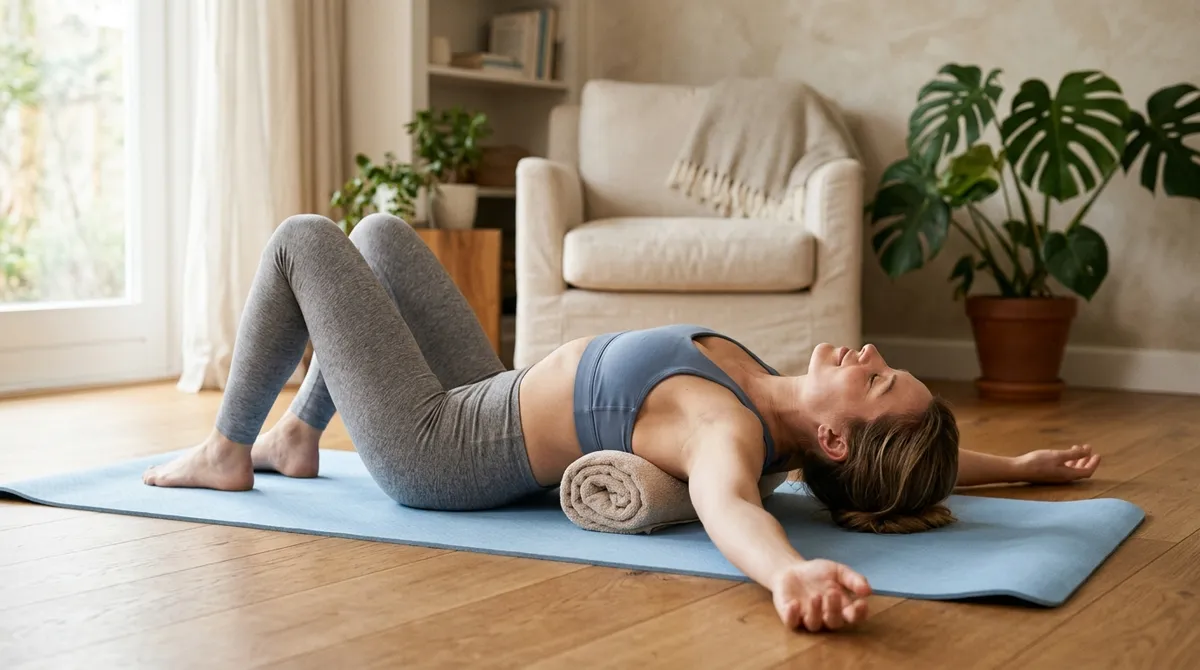
The arm opening exercise targets shoulder and chest tightness that commonly develops from forward head posture and rounded shoulders associated with desk work. This movement works to counteract the internal rotation of the shoulders and opening of the chest that occurs during prolonged sitting.
The exercise combines gentle mobility work with strengthening of the posterior shoulder muscles, helping to restore balanced muscle activation around the shoulder girdle.
The Importance of Controlled Movement
Both exercises emphasize slow, controlled movement patterns rather than rapid or forceful stretching. This approach allows the nervous system to adapt gradually to new ranges of motion while building strength in those positions, creating more sustainable improvements in flexibility and posture.
The controlled nature of these movements makes them particularly suitable for beginners who may be dealing with significant stiffness or those who are new to movement-based interventions.
Creating a Quick Reset Routine
These two moves can form the foundation of a short "desk stiffness reset" routine. According to reports, such routines can be completed in just five minutes, making them highly accessible for busy professionals or anyone looking to address tension without a significant time commitment.
The beauty of this approach lies in its simplicity and effectiveness. Rather than requiring complex equipment or extensive time commitments, these exercises can be performed virtually anywhere with minimal space requirements.
Beyond Core Strengthening
While Pilates is often associated primarily with core strengthening, these exercises highlight how the practice extends far beyond abdominal work. The method's emphasis on full-body integration and movement quality makes it particularly effective for addressing the postural imbalances that create stiffness in modern lifestyles.
By focusing on movement patterns that counteract common postural problems, these exercises help practitioners develop better movement habits that can prevent future stiffness and tension.
Making Movement Accessible
The beginner-friendly nature of these exercises removes common barriers to starting a movement practice. According to reports, beginners particularly appreciate these moves, suggesting that they provide an accessible entry point for those who may feel intimidated by more complex fitness routines.
This accessibility is crucial for addressing the widespread nature of desk-related stiffness, as it allows individuals to take immediate action without needing special training or equipment.