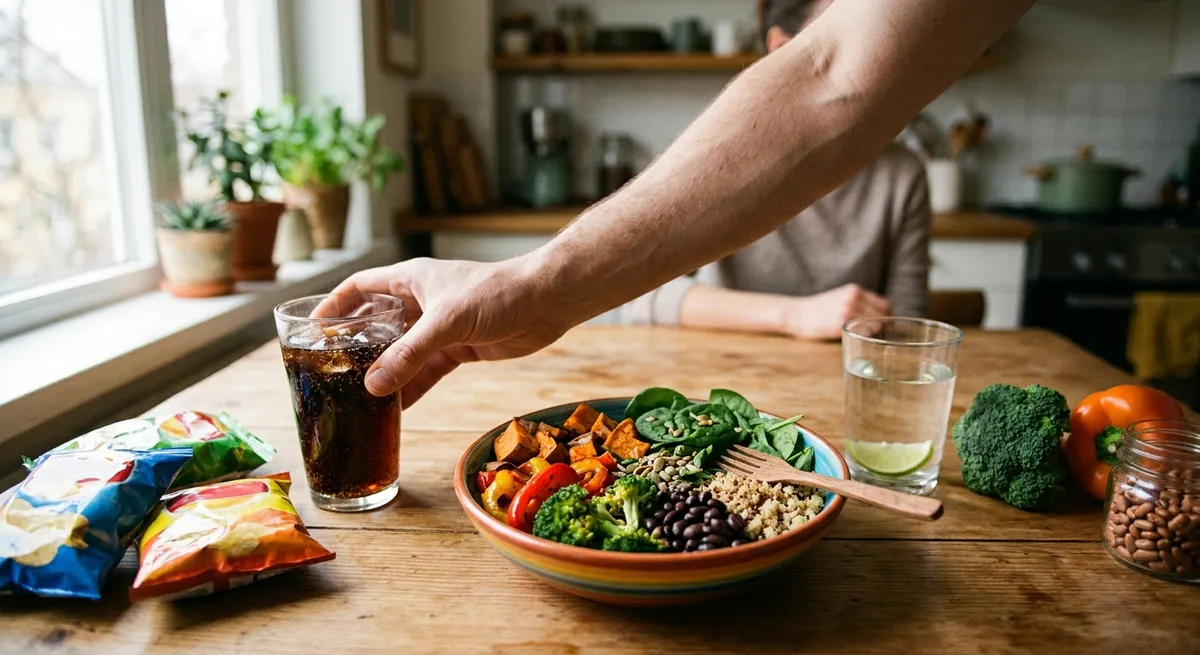
A small study published in JAMA Psychiatry, as reported by Healthline, found that cutting ultra-processed food (UPF) intake by more than 85% was associated with significant improvements in depression symptoms. Participants showed lower depression scores across multiple standard measures. Below, you'll find what that does and doesn't tell you, and a practical way to shift your own eating without turning every meal into a project.
What the Study Actually Found
Here is what's supported by the reporting: the researchers looked at people who sharply reduced ultra-processed foods, and those people scored lower on depression across several standard measures. The drop in UPF intake was large, more than 85%.
Two caveats matter. First, this was a small study, so treat it as a promising signal, not a final answer. Second, an association is not proof that food alone caused the improvement. My read: it adds to a growing body of work linking food choices with mood, and it's a good reason to experiment, not a reason to drop other care.
If you're dealing with depression, diet is one tool among several. Talk with a healthcare professional before changing any treatment plan, and don't treat groceries as a replacement for therapy or medication.
Start With Your Most Frequent UPF, Not Your Whole Pantry
The study's 85% reduction is dramatic. You don't need to match it on day one. A more sustainable path is to find the one or two ultra-processed items you eat most often and replace those first.
To find them, spend three days jotting down everything that comes in a wrapper, bag, or bottle. Look for patterns. Common repeat offenders include:
- Sugary drinks
- Packaged snacks
- Anything you grab on autopilot at the same time every day
Pick the top one or two. That's your whole project for the first couple of weeks.
Realistic Swaps That Don't Require a Cooking Overhaul
The goal is to build meals around whole foods while keeping convenience in the picture. A few swaps to try:
Replace the drink
If a sugary drink is your daily habit, try sparkling water with citrus, unsweetened iced tea, or plain water with fruit slices. Keep the swap sitting where the old drink used to be, in the fridge or at your desk.
Replace the snack
If packaged snacks are your afternoon default, pre-portion something simple: nuts, an apple with peanut butter, plain yogurt with berries, or hummus with cut vegetables. Prep it once on the weekend so the easy option is also the better one.
Replace one meal component
You don't have to scrap dinner. Swap a boxed side for a baked potato or brown rice, or trade a bottled sauce for olive oil, garlic, and canned tomatoes.
Don't Fear Every Processed Food
"Ultra-processed" is not the same as "anything that isn't fresh." Frozen vegetables and canned beans are still healthy, practical choices. They're affordable, they keep, and they make it far easier to put a whole-food meal together on a tired weeknight.
A useful rule of thumb: check the ingredient list. If it's short and you recognize the items (beans, water, salt), you're likely in good shape. If it reads like a chemistry set, that's a candidate for a swap.
Why Food Might Affect Mood
The study's reporting points to the broader link between diet and mental health, and researchers have proposed several explanations, such as gut health, inflammation, and neurotransmitter balance. I'd treat those as plausible theories worth watching, not settled mechanisms, since the details of this particular study's findings on how it works aren't something I can confirm here. What you can do with the idea is simple: eat in a way that supports your gut and your energy, which usually means more fiber-rich plants and fewer heavily packaged products.
A Simple Two-Week Experiment
If you want to test this on yourself, keep it low-pressure:
- Days 1-3: Track what you eat and mark the ultra-processed items.
- Days 4-7: Swap your single most frequent UPF for a whole-food alternative.
- Week 2: Add a second swap. Stock frozen vegetables and canned beans so a fast, whole-food meal is always available.
- Throughout: Jot down your mood and energy each evening in a line or two.
This won't replicate a clinical study, and a two-week note isn't proof of anything. But it gives you real information about how you feel, and it builds the habit that makes bigger changes possible.
The Takeaway
Pick the one ultra-processed food you reach for most often, and replace it this week with something simple and whole. Small, repeatable change beats a perfect plan you abandon by Thursday.